A well-chosen architectural film that is professionally applied to a properly prepared surface can look good for years, even on pieces that get daily use. Durability is not a single number on a spec sheet. It is the sum of four things: the film itself, the surface underneath, the installation and the care afterward. Get all four right and a wrapped credenza, reception desk or hotel headboard holds up far longer than most people expect. Get one wrong and the edges lift in months.
This guide is for designers, property managers, installers and homeowners who want to know what “durable” means in practice, which test numbers matter, and where wraps fail. One note on scope: search results for this topic are crowded with moving-day stretch wrap, the plastic sheeting that protects a sofa on a truck. We are talking about something different: a self-adhesive decorative film that permanently refinishes the surface of furniture.
TL;DR
- Film quality matters, but surface condition and installation quality usually decide whether a wrap fails early.
- Look for measured data, not adjectives: abrasion resistance, pencil hardness, film thickness and a written warranty.
- Bodaq interior film is 0.2 mm (8 mil) thick, tested at 15.1 mg abrasion loss (ISO 9352) and 3H pencil hardness (ASTM D3363), with a 10-year material warranty.
- Edges, corners and heat sources are the usual failure points. Prep and technique protect them.
- Cleaning with mild detergent and avoiding abrasive pads keeps the finish intact.
Table of Contents
- What “durable” means for a wrapped surface
- The numbers worth checking on a spec sheet
- How long does a furniture wrap actually last?
- Surface prep: the quiet driver of wrap durability
- Where wraps fail, and how to prevent it
- Our perspective: durability is a system
- Wrap versus paint, laminate and replacement
- How to choose a film for a durable furniture wrap
- Bring Bodaq to your next wrap project
- Care tips that extend the life of a wrapped piece
- FAQ
- Sources
What “durable” means for a wrapped surface
When designers say a wrap is durable, they usually mean five separate things:
- Scratch and abrasion resistance: the surface survives bags, keys, chairs, luggage carts and cleaning.
- Adhesion: the film stays bonded at edges, corners and seams.
- Stability: it does not crack, yellow or fade in ordinary interior light.
- Cleanability: it tolerates regular cleaning without dulling or staining.
- Hygiene and moisture tolerance: it does not swell like a damaged laminate edge or raw MDF.
A product can be strong at one and weak at another, so it helps to treat each separately. A film with excellent hardness but poor adhesive grip on a slick surface will still fail, just in a different place.
The numbers worth checking on a spec sheet
Marketing language is cheap. Test methods are not. When we publish performance data for Bodaq, we point to the standard used so you can compare like with like.
According to the Bodaq performance data page, the film measures 0.2 mm (8 mil) thick, comes as PVC film with an acrylic pressure-sensitive adhesive, and tests at 15.1 mg for abrasion resistance under ISO 9352 and 3H pencil hardness under ASTM D3363.
| Property | What it tells you | Bodaq result |
|---|---|---|
| Film thickness | Body of the film, how much it masks and resists wear | 0.2 mm (8 mil) |
| Abrasion resistance (ISO 9352) | Material lost under a standardized abrasive wheel; lower means more wear resistance | 15.1 mg |
| Pencil hardness (ASTM D3363) | Resistance to surface scratching | 3H |
| Material warranty | The manufacturer’s written commitment | 10 years |
A few reading tips:
- Thickness is not everything. A thicker film can resist wear longer, but it can also be harder to conform around tight radii. Bodaq is designed to stretch, which is why it works on shaped surfaces.
- Ask for the test method. “Scratch resistant” without a standard behind it is a claim, not data.
- Read the warranty conditions. Our FAQ states a 10-year warranty on the film material and a 5-year warranty on installations completed by a Bodaq Certified Installer. Warranties generally depend on proper installation, so check the terms for your project.
How long does a furniture wrap actually last?
Independent reporting on vinyl wrap points the same way. A UK home publication quoted experts saying that a high-quality wrap, professionally installed and well cared for, can last up to ten years, while lower-grade or poorly applied wrap lasts far less. That article is about kitchens, which are a tough test: heat, steam, grease and constant handling.
For furniture, realistic expectations break down like this:
- Low-contact pieces (bookcases, wardrobe fronts, headboards): the film is rarely touched, so lifespan is driven mostly by the original installation.
- Medium-contact pieces (dressers, credenzas, doors): fingerprints, cleaning and occasional knocks. A quality film handles this well.
- High-contact pieces (reception desks, counters, tabletops, elevator interiors): the most demanding category, where abrasion data and edge detailing matter most.
We would rather give you the honest framing than a promised number of years. Lifespan depends on the product, the substrate, the installer and the use. The 10-year material warranty tells you what we stand behind on the film itself.
Surface prep: the quiet driver of wrap durability
Most early failures are not film failures. They are substrate failures. A guide on vinyl wrap for furniture from D and G Flooring stresses that the surface must be clean, smooth and stable, because a thin film will show whatever lies under it, from dents to flaking paint to textured grain.
Here is what that means on a real piece of furniture:
- Clean first. Skin oils, furniture polish and silicone sprays prevent the adhesive from bonding. Degrease thoroughly and let the surface dry.
- Repair, then sand. Fill chips and gouges, and smooth any peeling finish. Film follows the surface faithfully, which is wonderful for texture and unforgiving for flaws.
- Check what you are bonding to. Porous, dusty or flaking surfaces need sealing or priming. Very glossy surfaces may need light scuffing. Our guide on matching film grade to substrate goes through the pairings.
- Let the room settle. Install at normal interior temperatures, away from direct heat sources, with the furniture and film both acclimated.
If you install professionally, our five-step surface prep guide for film installers walks through how to prevent edge lifts, the most common visible failure.
Where wraps fail, and how to prevent it
Edges and corners
Film that is stretched hard around a corner wants to return to its original shape. Over time it pulls back, and the edge lifts. The fix is technique: work tension into flat areas rather than the corner itself, then use heat sparingly and only where the film needs to conform. Installers who rush this step see peeling within weeks.
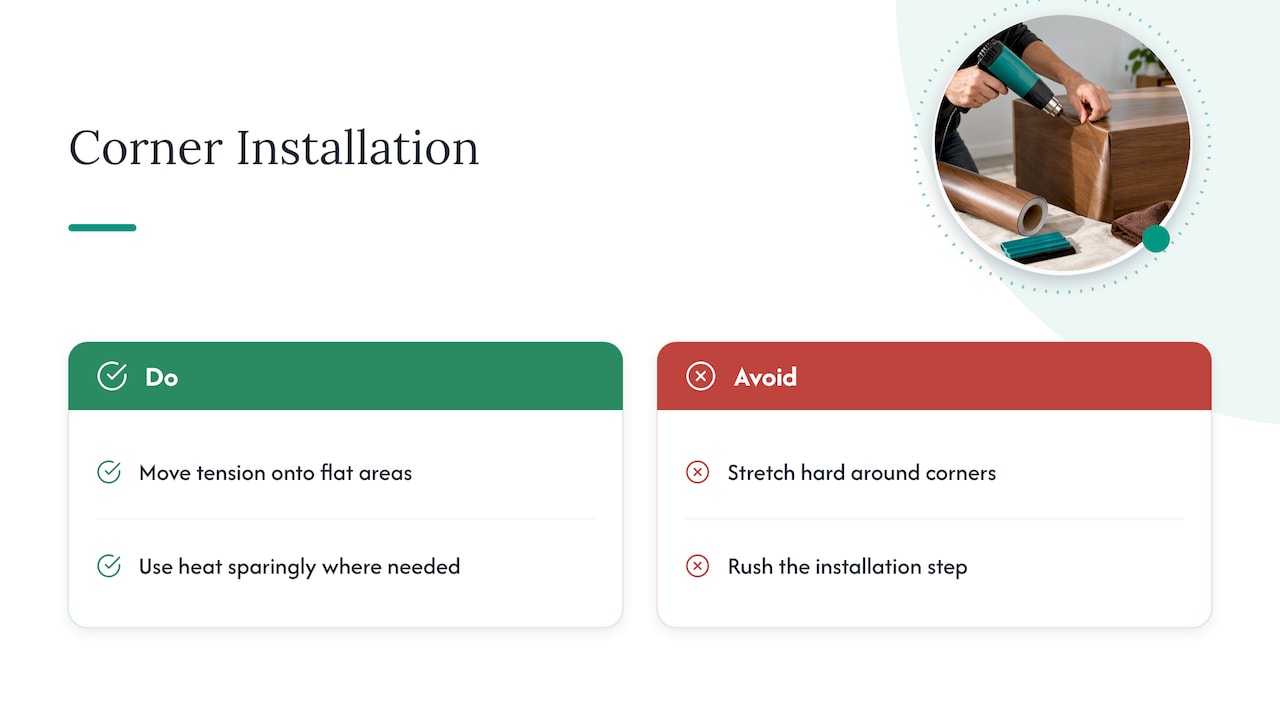
Bodaq’s stretchable construction and air-channeled adhesive are designed to make this easier, since the film repositions and releases trapped air rather than bubbling. Certified training exists for professionals who want to build this skill, and it is also the basis of the installation warranty.
Heat sources
Furniture beside radiators, ovens, dishwashers or in direct sun behind glass is exposed to repeated heat cycles. Keep wrapped panels away from continuous heat, and discuss the location with your installer before choosing a surface. When in doubt, ask for a test piece in the actual spot.
Moisture
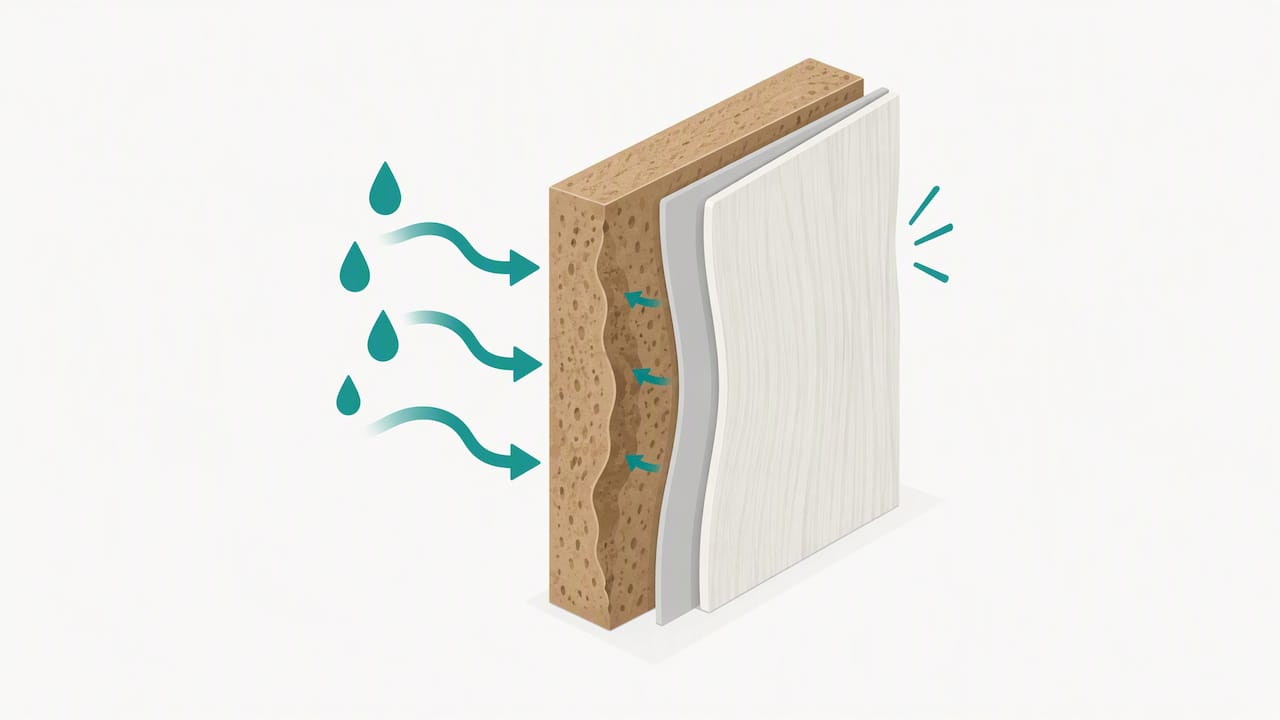
Kitchens, bathrooms and hotel vanities bring humidity. Moisture-related failure is usually moisture coming from behind the film, such as a swollen board, rather than the film absorbing water. We describe our own verification process in a 48-hour adhesion test for moisture-resistant wall finishes, which is worth replicating on a sample before a large order.
Abrasive cleaning
Scouring pads and harsh solvents scratch and dull any decorative surface. Mild detergent and a soft cloth are the right tools. Our FAQ lists mild detergent as the recommended cleaning method.
Cheap film on an expensive piece
Thin, uncertified film saves money at purchase and costs it later in re-wrapping. Because labor is typically the biggest cost on a project, spending less on film to save a little is rarely a good trade.
Our perspective: durability is a system
We make Bodaq with Hyundai L&C, and the question we hear most often is whether the film will hold up. Our honest answer starts with a question back: what is it going onto, and who is installing it?
We have seen the same film perform beautifully on a hotel corridor and disappoint on a poorly prepared surface. That is why we publish test data openly, offer samples before you commit, and invest in certified installer training. A 3H hardness rating and a 15.1 mg abrasion result are real advantages, and so are over 450 textures and colors across wood, metal, stone and marble, solid colors, and fabric and leather looks. But none of it replaces a clean, sound substrate and careful edge work.
If you are specifying for a commercial space, think of the film as one layer in a system. Choose the grade for the substrate, test a sample in place, insist on prep, and install with the same discipline you would give millwork. Do that, and a wrap becomes one of the most efficient ways to renew furniture without demolition, waste or downtime. Our own write-up on revisiting commercial projects after installation shows how that plays out over time.
— Bodaq
Wrap versus paint, laminate and replacement
A wrap is not the only way to refresh furniture, so it helps to compare it by type.
| Option | Durability profile | Downtime | Waste |
|---|---|---|---|
| Architectural film | Strong scratch and abrasion data; can be replaced without rebuilding the piece | Short; often hours, not days | Low |
| Paint or lacquer | Prone to chipping on edges; needs curing time | Longer, with drying and recoat times | Moderate, with cans and sanding dust |
| New laminate or veneer | Very durable once bonded; damage is hard to repair | Long, since the piece is often removed or rebuilt | High |
| Full replacement | New and durable | Longest, including lead time | Highest |
Film shines where speed and flexibility matter. A hotel can update rooms without taking them out of service for long, and an office can refinish a run of desks over a weekend. Our pieces on office renovation in hours instead of weeks and why architectural films suit hospitality go deeper on both.
There is also an air quality angle. UL notes that GREENGUARD certification addresses indoor air quality through emissions testing under standards like UL 2818, and certified low-emitting products are a growing priority in sustainable fit-outs. If this matters for your project, ask any film supplier for current certification documentation, and read our overview of Bodaq as a sustainable solution.
How to choose a film for a durable furniture wrap
Use this checklist before you order:
- Define the use. Decorative bookcase or reception counter? Contact level sets your standard.
- Match the finish to the wear. Textured woodgrains and matte finishes hide fine scratches better than high gloss in busy areas.
- Request test data. Look for abrasion and hardness figures with named standards.
- Confirm the warranty. Know what is covered, for how long, and what installation conditions apply.
- Order samples. Look at them in your lighting, test adhesion on your substrate, and clean them the way you will clean the finished piece.
- Plan the install. Decide who will apply it, how the surface will be prepared, and how edges will be handled.
- Plan the care. Share cleaning guidance with whoever maintains the space.
Bring Bodaq to your next wrap project
If you want to see the finish in your hands, start with a sample. Bodaq offers more than 450 textures and colors, plus installation tools and certified training for professionals. Browse the full Bodaq collections to compare wood, metal, stone and marble, solid colors, and fabric and leather, or look at a rich option such as Smoked Teak from the Wood Collection. When you are ready to talk quantities, dealer kits or project support, head to Bodaq Interior Film.
Care tips that extend the life of a wrapped piece
- Clean regularly with mild detergent and a soft cloth, then dry.
- Avoid abrasive pads, strong solvents and sharp tools on the film.
- Use coasters and pads under hot items and heavy objects on tabletops.
- Keep heat sources away from wrapped edges.
- Fix small lifts early. A lifted corner caught in the first weeks can often be pressed back down by your installer, while a neglected one collects dirt and spreads.
- Keep a leftover offcut from the roll for future repairs, since batches can differ slightly in tone.
FAQ
What are the downsides of vinyl wrap on furniture?
The main risks are poor surface prep, rushed edge work and low-grade film. A wrap also mirrors any flaws in the surface below it, so damaged pieces need repair first. Choosing a tested film and a careful installer addresses most of these problems.
How long do furniture wraps typically last?
It depends on film quality, surface, installation and use. Experts cited by a home design publication say high-quality, professionally installed wrap can last up to ten years in a demanding kitchen. Bodaq carries a 10-year material warranty, with a 5-year installation warranty when a Bodaq Certified Installer does the work.
Does vinyl wrap peel off easily?
Not when it is installed correctly. Peeling usually traces back to dirty or unstable surfaces, excessive tension at corners or heat exposure. Following a prep routine, such as our surface prep guide, prevents most edge lifts.
Is stretch wrap the same thing as a furniture wrap film?
No. Moving stretch wrap is thin protective plastic for transit and is removed afterward. Furniture wrap film is a decorative, self-adhesive surface that stays on the piece and is designed to resist daily wear.
Sources
- Bodaq performance, fire and material data
- Bodaq Interior Film FAQs
- How long does vinyl wrap last in a kitchen? (Ideal Home)
- Vinyl Wrap for Furniture: Complete Guide for Homeowners (D and G Flooring)
- UL GREENGUARD Certification (UL Solutions)