
Architectural Film Basics11 min read
Window Mullion Wrap: Refinish Frames Without Closing Rooms
How a window mullion wrap works, how to measure, prep and apply it, and why architectural film lets hotels and commercial sites finish frames with no closure.
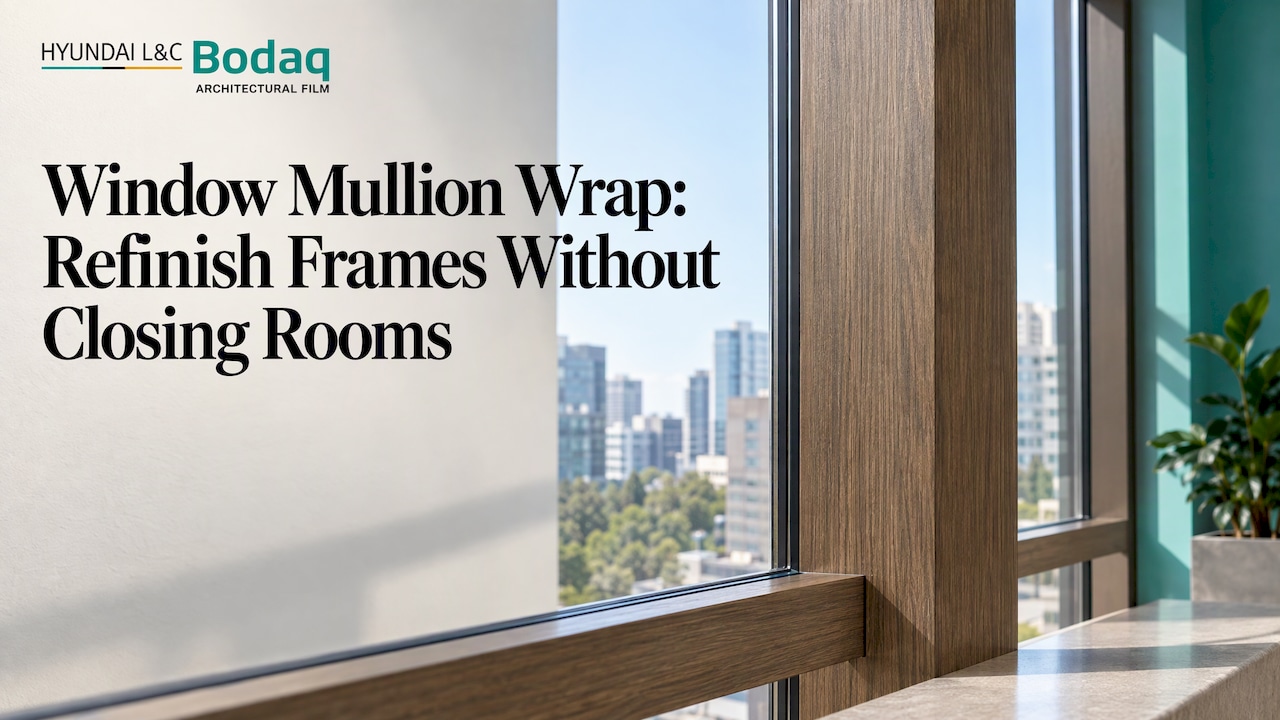
A window mullion wrap is a finish applied over the existing mullions and frame members, so tired, mismatched or dated frames change color and texture without being replaced. For hotels, offices and retail sites, the business case is simple: no demolition, no closure and no lost bookings. A crew can finish a lobby curtain wall or a corridor of guest-room windows in days, and rooms go back in service the same night. We build the case below around architectural film, the self-adhesive, stretchable material that lets a crew do this work with hand tools.
TL;DR
- A mullion wrap covers the visible face of the bar that joins two windows. It can be bent aluminum cladding or, for interior-side and many storefront applications, architectural film.
- Film keeps rooms in service: no demolition, no sealant curing time on a replacement unit, and no lost bookings.
- Prep decides the result. Clean the surface, mind the gaskets and sealant lines, and use heat only as the film and surface allow.
- Bubbles and lifting come from technique, and both are preventable with the right squeegee, pressure and post-heat steps.
- Installers can turn this into a new service line with certified training, tools and sample kits.
Table of Contents
- What a window mullion wrap actually covers
- Why film changes the schedule for operators
- Know your frame before you quote
- How to wrap a mullion with architectural film, step by step
- Fixing bubbles, lifting and rough cuts
- Wrap or film: which fits which job
- Durability and what to specify
- A new service line for installers and millworkers
- Ready to quote a frame job
- FAQ
- Sources
What a window mullion wrap actually covers
A mullion is the extrusion that joins one window unit to the next, according to the window industry glossary. A mullion cover, in the same glossary, is an extrusion that joins the perimeter legs of panning over existing mullions. In plain terms, the cover hides the structural bar and presents a clean, finished face.
The wrap family has a few members:
- Panning or capping: the District of Columbia Office of Planning describes panning, also called capping or wrapping, as a material, usually metal or vinyl, applied over the exterior surface of an existing frame or mullion.
- Bent aluminum cladding: per one exterior remodeler, a window wrap is custom-bent aluminum or vinyl-coated aluminum. Crews measure each opening, bend coil stock on site and seal every seam.
- Snap-on covers: common on curtain wall, where prefinished aluminum extrusions snap over the mullions for appearance, as IIBEC describes.
- Architectural film: a thin, self-adhesive layer applied directly to the mullion, frame, sill return or surround.
The first three are fabricated, fitted and fastened pieces. Film is applied like skin. That difference drives the schedule, the crew size and the disruption, which is what an operator pays for.
Why film changes the schedule for operators
Think about what a hotel general manager is protecting: room nights. Anything that takes a room or a lobby out of service has a cost per night. Replacing window units means demolition, dust, trade coordination and closed rooms. Fabricating and fitting metal capping means measuring, bending, fastening and sealing each opening.
Film is a different order of work:
- No demolition. The existing frame stays in place. You are changing the surface, not the structure.
- No closure. Work happens in the room, on the frame, without wet trades.
- No lost bookings. A crew can work through a floor in sequence and hand rooms back the same night.
- Lobbies done in days, not weeks. A storefront-style lobby with dozens of mullions is a finishing job, not a construction project.
For property managers on commercial leases, the same logic applies to tenant turnover. A dated bronze anodized grid can be brought in line with a new brand palette between tenants, without a capital project.
The PDAA’s installer guide treats wrapping as a skilled trade with defined technique, which is why we encourage crews to train on it. We cover that below.
Know your frame before you quote
Before you price a job, walk it and record four things.
1. Frame material and existing finish
Aluminum, vinyl, wood and fiberglass all take film differently. Factory-baked enamel on aluminum is generally the most dependable substrate. One supplier lists its aluminum mullion trim as .019-inch aluminum with baked enamel, and baked-on or painted enamels are the standard finish for capping, according to a trim capping contractor. Sound, well-bonded finishes give film a good base. Flaking paint or chalking must be addressed first, because film is only as stable as what is under it.
2. Gaskets and sealant lines
A signmaker on an industry forum points out that the silicone sealant or rubber gaskets between mullion and glass cannot be covered and may show as a thin stripe of the old color. That is a design decision, not a flaw. Plan the film edge to land cleanly at the gasket, and tell the client what color line will remain. On a black or dark bronze gasket, a deep metallic or solid color finish makes the line disappear.
3. Profile complexity
Flat faces are quick. Pressure-plate caps, deep reveals and rounded profiles require stretch and heat control. This is where a stretchable film earns its place: it conforms to curves and returns where flat vinyl would pucker.
4. Exposure
Interior faces of mullions in climate-controlled rooms are the easiest. Exterior faces see UV and weather. IIBEC associates fading and peeling of metal frame finishes with finish quality, UV exposure and salt exposure, so confirm with your supplier which surfaces suit the product before you commit to exterior faces, particularly in coastal markets.

How to wrap a mullion with architectural film, step by step
Here is the sequence we teach and recommend. The steps assume a professional crew. Our own installation guide walks through the basics in more detail.
Step 1: Measure and plan the seams
Measure each mullion’s face width and run length, then add a margin for trimming. Plan the film so a seam falls at a joint or an inside corner, never in the middle of a visible run. Because wrap work uses narrow strips, a roll goes a long way, and offcuts from one mullion often cover the next. Bodaq’s stretchable film is designed to minimize waste, which matters when you bid by the linear foot.
Step 2: Clean and degrease
Clean the frame thoroughly and finish with isopropyl alcohol. Graham’s panning manual specifies isopropyl alcohol for cleaning seal areas before sealant goes on, and the same discipline applies to film: any oil, silicone or dust left on the frame becomes a bubble or a lifting edge later. Mask the glass and gaskets.
Step 3: Cut oversize, then position
Cut the film strip a little over length. Peel back a short section of liner, tack the starting edge at a corner, and hold the strip under light tension. Starting at one end and working to the other keeps the strip straight. Our film’s air-channeled adhesive is designed to let trapped air escape as you squeegee, which makes repositioning less stressful on long runs.
Step 4: Squeegee with overlapping strokes
Work from the center of your starting point outward with firm, even pressure and a felt-edged squeegee. The PDAA Vinyl Installation Proficiency Guide names four main causes of bubbles: a bad squeegee, insufficient pressure, pre-tack and stroke pattern. Fix those four habits and most callbacks disappear. The same guide advises applying vinyl dry rather than wet, other than translucent films.
Step 5: Wrap the edges and corners
At corners and profile transitions, warm the film gently so it stretches around the bend instead of creasing. Relieve tension as you go. The PDAA guide stresses understanding vinyl memory, the tendency of stretched vinyl to return to its original shape, as the key to preventing lifting. Over-stretching a corner is the most common cause of an edge that opens up days later.
Step 6: Trim and post-heat
Trim at the glass line with a sharp blade and a light touch, so you never score the frame or glazing. Then post-heat. The PDAA guide gives post-heating to 200°–225°F, cooling to 90–100°F and re-squeegeeing as the way to lock film into complex curves. Use a surface thermometer rather than guessing.
Step 7: Inspect from guest distance
Walk the run at the distance a guest or tenant sees it, with the room lights on and then off. The PDAA takes the position that bubbles and wrinkles are never acceptable in finished work, and that is a sound standard to bill against.
Fixing bubbles, lifting and rough cuts
Even good crews hit these. The remedies are well established.
- Bubbles: per the PDAA guide, poke a small hole at the bubble’s edge with a fine needle-tip air release tool, never a knife, and press the air out toward the hole.
- Lifting edges on curves: reheat to the post-heat range, let the film cool, and re-squeegee with firm pressure.
- Poorly cut edges at the glass line: a clean, well-cut strip laid over the problem area can hide it. Prevent it by cutting with a fresh blade and a steady wrist.
If you must reverse a section, warm it and peel back slowly at a low angle, and use a residue remover appropriate to the surface. Keep the heat low enough to protect gaskets and glazing.
Wrap or film: which fits which job
| Job | Typical approach | Why |
|---|---|---|
| Occupied hotel corridor or guest rooms | Architectural film | No demolition, rooms back the same night |
| Retail or office storefront grid | Architectural film | Fast, tenant-ready, brand color change |
| Exterior frames needing full weather cladding | Bent aluminum wrap | A cladding system, built for exterior exposure |
| Historic facades | Check local rules first | Panning is generally discouraged on historic properties, per the DC Office of Planning |
For most hospitality and commercial interior work, film is our first recommendation. It is the only option on the table that changes the look without changing the building, and it fits inside a night’s downtime.
Durability and what to specify
Owners ask how long a finish lasts. Public specifications give a sense of the bar a mullion finish is expected to meet: NYCHA’s 2025 aluminum window specification requires pigmented finishes on mullions and trim to meet AAMA 2603 and carry a 10-year warranty against chipping, peeling, cracking and blistering. That is a framework for fabricated finishes, and it shows how seriously owners treat frame appearance.
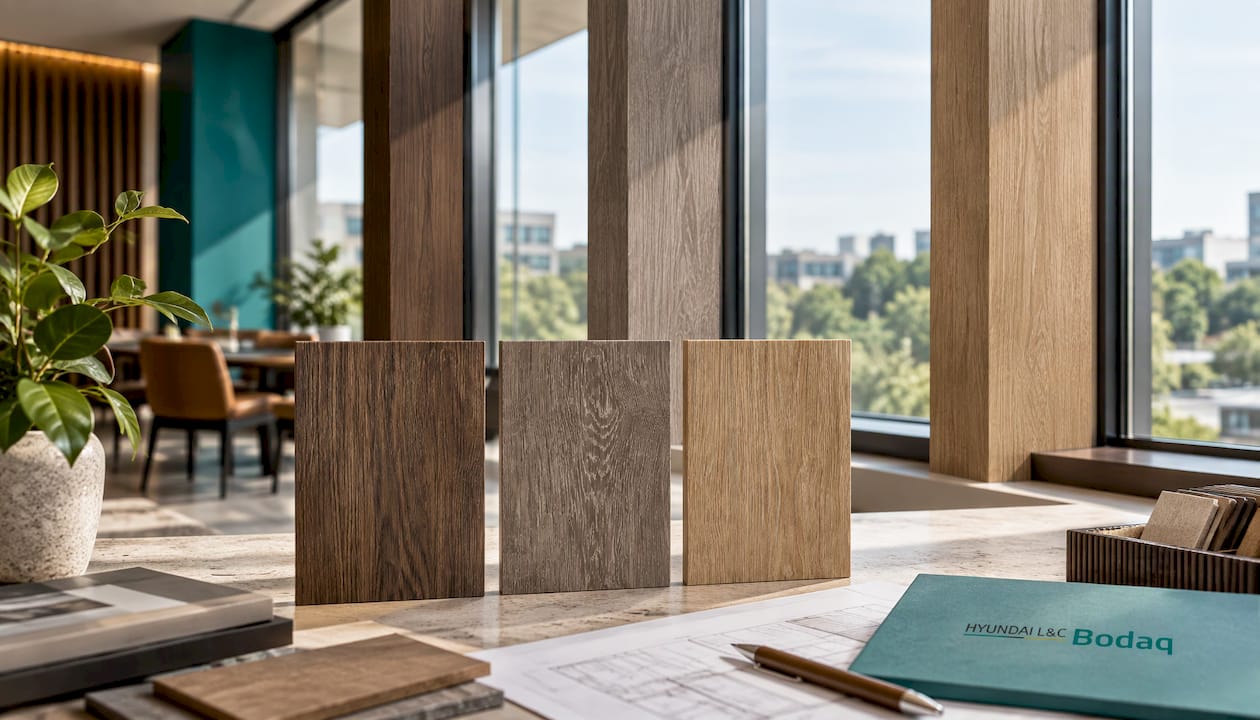
Bodaq’s film is positioned for certified durability in high-traffic environments and meets eco-friendly standards. When you write a bid, ask us for the specification documents for the collection you choose and attach them to your scope. The collections most used on frames are Wood, Metal and Solid Colors. A walnut like SPW53 from the Origin Wood Collection turns a plain white grid into something warm, and a Silver Mist Oak, LW118 reads lighter and more contemporary.
A new service line for installers and millworkers
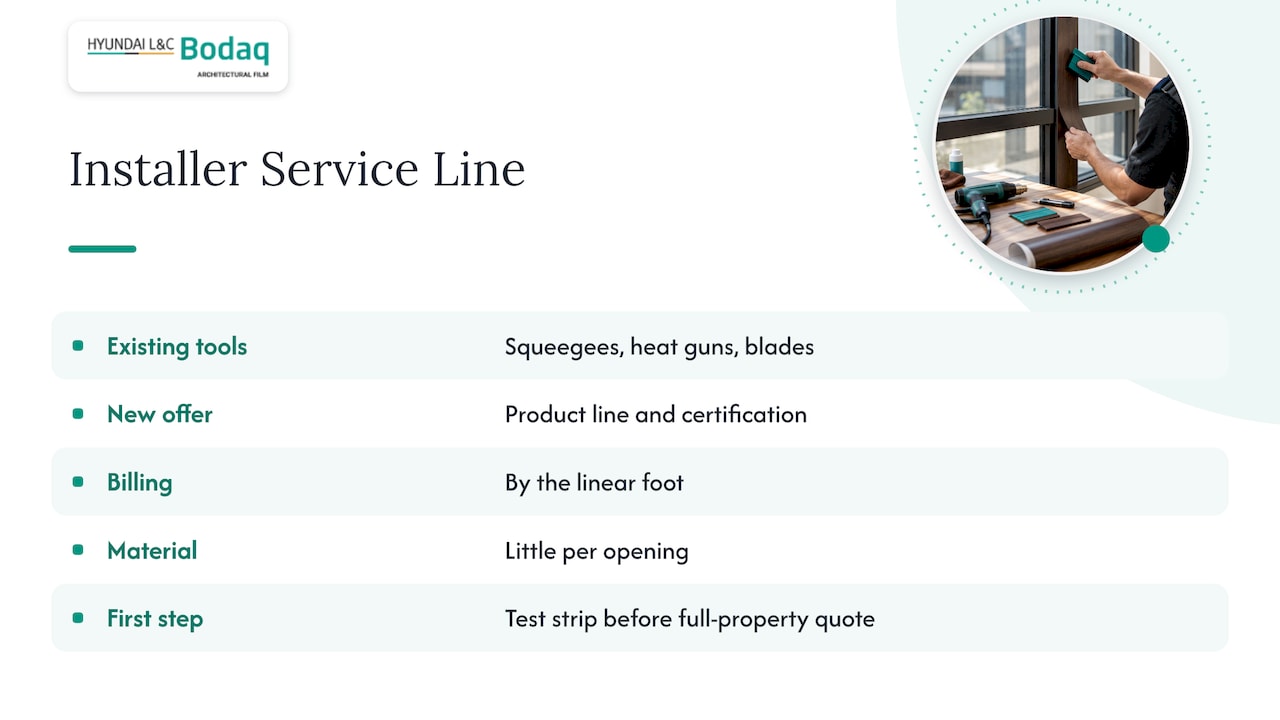
If you run a window-wrap, signage, millwork or renovation crew, mullion work uses what you already own: squeegees, heat guns, blades and a trained eye. What you add is a product line and a certification. Frame wrapping bills by the linear foot, needs little material per opening and repeats across a property, so one hotel can become a multi-floor contract.
The selling points for your bids are the same ones we have been building: no demolition, no closure and no lost bookings. A general contractor who can hand back a lobby in days wins the next bid. Our common areas of application page shows where crews typically use the film beyond frames, which helps you package doors, casings and reception walls into one proposal.
Bodaq also offers installation tools, dealer kits, certified training for professional installers and sample requests, so a crew can start with a test strip on a real mullion before quoting a full property.
Our view on mullion work
We see the mullion as the most overlooked line in a room. Guests never think about it, yet it frames every view. Because it is thin, repeated and hard to reach with traditional trades, it has usually been left alone until a full window replacement.
Our film was built to change that. It stretches around profiles, the adhesive is air-channeled so that installation stays clean, and the catalog of more than 450 textures and colors means the frame can match a brand palette instead of fighting it. We think of it as the design equivalent of a tailored garment: the structure stays, the fit and finish change.
For operators, that means a floor can be finished and handed back the same night. For installers, it means a service line that uses the crew and tools already on the truck. That is why we pair the film with training and dealer kits.
Bodaq
Ready to quote a frame job
Start with a sample on a real mullion so the client sees the finish in their own light, then specify the collection that suits the frame. Browse the Bodaq architectural film collections to choose wood, metal, stone, solid color or fabric finishes, or reach us through the Bodaq site for tools, dealer kits and installer training.
FAQ
Can you wrap a window mullion without removing the glass?
Yes. Film goes on the visible face of the mullion, so the glazing stays in place. Mask the glass and gasket, and plan where the film edge will meet the sealant line, because gaskets and sealant cannot be covered and will remain visible.
How long does a mullion wrap job take?
It depends on the number of openings and the profile, but a crew working floor by floor can hand rooms back the same night, and a lobby grid is a matter of days rather than weeks. Walk the site first and count linear feet and corners, since corners take the most time.
What causes bubbles when wrapping a frame?
The PDAA identifies four main causes: a bad squeegee, insufficient pressure, pre-tack and stroke pattern. Clean the surface well, use overlapping firm strokes, and release any trapped air with a needle-tip tool rather than a knife.
Are mullion wraps allowed on historic buildings?
Rules vary by jurisdiction. The District of Columbia’s window standards, for example, generally discourage panning or wrapping of mullions on historic properties. Check with the local preservation office before you quote a historic facade.
Sources
- Window Industry Language glossary
- DC Office of Planning, Chapter 23 Window Standards
- American Remodeling, Window Wraps
- IIBEC, Repair of Curtain Wall Systems
- Trim Bender, Aluminum Window Mullion
- Sunshine Contracting Corp., What Is Trim Capping
- Signs101, Cover Window Mullions
- Graham Windows, Panning Installation Manual
- PDAA Vinyl Installation Proficiency Guide, 5th Edition
- NYCHA Aluminum Windows specification, 2025