
Architectural Film Basics9 min read
Chemical Resistant Wall Finish: What to Specify and Why Film Fits
How to choose a chemical resistant wall finish: what ASTM tests measure, how cleaners and disinfectants wear on walls, and where interior film fits.
A chemical resistant wall finish is a surface that keeps its color, gloss, adhesion and texture after repeated contact with the cleaners, disinfectants, oils and spills of your space. For interiors that need to look new while being scrubbed daily, a factory-made architectural film such as Bodaq’s is a strong answer: it arrives as a finished surface in over 450 textures and colors, installs without a wet trade on site, and suits hotels, offices, clinics and homes alike.
This guide explains what “chemical resistant” actually means, how the industry tests it, how to match a finish to your cleaning routine, and how to install and maintain it so the performance holds.
TL;DR
- “Chemical resistant” is not one rating. It depends on which chemical, how strong, and how long it stays on the wall.
- ASTM International’s standards for interior finishes list chemical resistance alongside abrasion, adhesion, impact and cleanability. Check all of them together, not just one.
- Your real exposure is usually the cleaning routine: disinfectants, degreasers and sanitizers applied again and again.
- Bodaq interior film is a stretchable, self-adhesive finish with an air-channeled adhesive, designed for rapid, low-waste upgrades in high-traffic spaces.
- Apply the film as a complete system on a sound, clean substrate, and write a cleaning routine into the handover.
Table of Contents
- What “chemical resistant” means for a wall
- What the standards say about high-performance interior finishes
- Match the finish to your cleaning routine
- Why interior film is a smart route to a durable wall
- Evaluating a finish for your specific chemicals
- Installation decides performance
- Cleaning, maintenance and repair
- Our perspective
- Choose your Bodaq finish
- FAQ
- Sources
What “chemical resistant” means for a wall
Most people picture a laboratory or a food plant. In practice, every wall in a busy building meets chemicals: quaternary disinfectants in a hotel corridor, degreaser behind a restaurant pass, alcohol wipes in a clinic waiting room, hand sanitizer around a reception desk, even the cleaning products in a family kitchen.
A finish resists them when it shows no objectionable change after contact. ASTM’s household-chemicals test method, ASTM D1308, frames the failure modes clearly: discoloration, change in gloss, blistering, softening, swelling and loss of adhesion. That list is a useful checklist for any wall, tested or not. If your finish does none of those after a month of your real cleaning routine, it is resisting.
Three variables decide the outcome:
- The chemical. Alcohols, bleach-based cleaners, quaternary ammonium disinfectants, acids and solvents behave differently on the same surface.
- The concentration. A diluted daily cleaner and a concentrated spot treatment are different tests.
- The dwell time. A quick wipe is not a spill left for an hour.
Write those three down for your space before you compare any product. It turns a vague wish into a specification.
What the standards say about high-performance interior finishes
ASTM’s guide D3730 for high-performance interior architectural coatings describes tough, durable finishes for steel, masonry, plaster and gypsum wallboard, and lists the properties worth testing: chemical resistance, abrasion, adhesion, impact, cleanability, mildew resistance, heat and humidity behavior, and dry-film thickness. The same guide notes that these finishes are typically used in public-building halls, lavatories, locker areas, laboratories, food-processing plants, dairies, restaurants, schools and transport terminals.
Two lessons carry over to any finish, film included:
- Chemical resistance never travels alone. A surface that shrugs off a disinfectant but scuffs at the first luggage trolley will still look worn. Judge the full set of properties against how your space is used.
- Spaces with hard use deserve a specified finish. The settings above are exactly where a standard decorative paint tends to need frequent touch-ups, and where a designed surface pays back.
If you specify for code compliance as well, our guide to ASTM E84 wall finishes under IBC Chapter 8 covers the fire-performance side of the same decision.
Match the finish to your cleaning routine
Start from what is actually in the janitor’s closet, not from a generic datasheet. A quick audit takes an hour:
| Space | Typical wall exposure | What to note |
|---|---|---|
| Hotel corridor and guest room | Daily disinfectant wipes, luggage and cart impact | Product names, dilution, wipe-down frequency |
| Restaurant or café | Grease, degreasers, sanitizer spray | Contact time on the wall, splash height |
| Clinic or dental office | Alcohol and quaternary wipes, frequent re-cleaning | Which disinfectants and how often |
| School or fitness area | Sanitizer, scuffs, sweat, impact | Wall height most hit, cleaning schedule |
| Family kitchen or mudroom | Household sprays, splashes, handprints | Which sprays, how close to the cooktop |
Collect the safety data sheet for each product. It names the active ingredient, which is what matters when you compare a finish with your cleaning plan.
Think in zones, not whole buildings
You rarely need the same performance everywhere. The walls behind a bar, around a hand-wash station or along a service corridor take the punishment. A lounge feature wall does not. Zoning lets you put a robust, easy-clean surface where the chemicals are and spend your design energy on texture and color elsewhere. Because Bodaq spans wood, metal, stone and marble, solid color, and fabric and leather looks, one family of materials can carry a consistent look across both zones.
Why interior film is a smart route to a durable wall
The usual way to get a hard-wearing wall is a multi-coat system applied on site. That means preparation, primer, coats, cure times and the risk of a space being out of service while it dries. Film changes the sequence.
Bodaq is a premium architectural interior film from Hyundai L&C. It is stretchable and self-adhesive, with an air-channeled adhesive that makes installation cleaner and simpler, and it is designed to minimize waste. For the people in our audience, that translates into practical benefits:
- Hospitality teams can refinish a corridor or a suite with less disruption, a real advantage when every room-night counts.
- Property managers get a finish designed for high-traffic environments, with certified durability, and a refresh path that does not mean demolition.
- Designers and architects get over 450 textures and colors, so a durable surface does not have to look institutional.
- Homeowners can renew tired walls, doors and furniture affordably without a full remodel.
If you are weighing options, our overview of self-adhesive wall finish and architectural film walks through how the product works, and what makes interior film last explains durability in more depth.
Easy-clean surfaces for the toughest walls
For spaces where wiping down is a daily event, start with the Easy Clean High-Performance Collection ECF01, a solid-color film built into our high-performance range. If you want the look of natural material in a demanding zone, the Rustic Stone EXF52 offers a stone character within the same high-performance family.
For related performance questions, see our pages on scratch-resistant wall finishes tested to ASTM D3363, moisture-resistant wall finishes and high-traffic wall coverings.
Evaluating a finish for your specific chemicals
A data sheet gives you a starting point. Your own conditions give you the answer. A sound evaluation follows five steps:
- List the chemicals from your safety data sheets, with dilution and frequency.
- Identify the standard test behind any claim. A household-chemicals method such as D1308 and a full interior-finish guide such as D3730 answer different questions.
- Define pass and fail using the failure modes above: color, gloss, blistering, softening, swelling, adhesion.
- Test on a sample of the actual finish. Apply the film to a sample board, expose a small area to your cleaners for the dwell time you expect, then rinse and inspect in daylight.
- Repeat a cycle. Walls fail from repetition. Wipe the same spot daily for two weeks to mimic real use.
Samples are part of what we offer, so you can put a Bodaq finish through your own routine before committing a whole project. Requesting them is the quickest way to see color, texture and cleaning behavior side by side.
Installation decides performance
A good finish on a poor substrate still fails. Three habits make the difference.
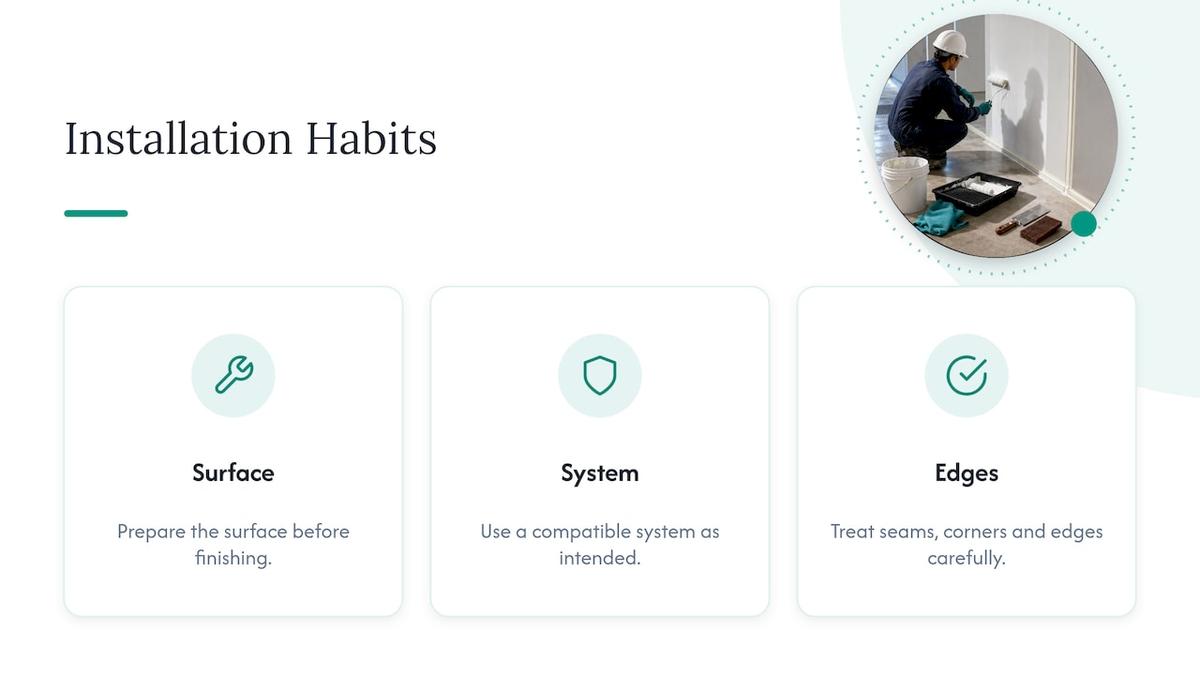
Prepare the surface
The wall should be sound, dry, clean and free of dust, grease and loose paint. Fill and sand damage, and let any repairs fully cure. Any contamination left on the wall is what the adhesive will bond to.
Use the system as intended
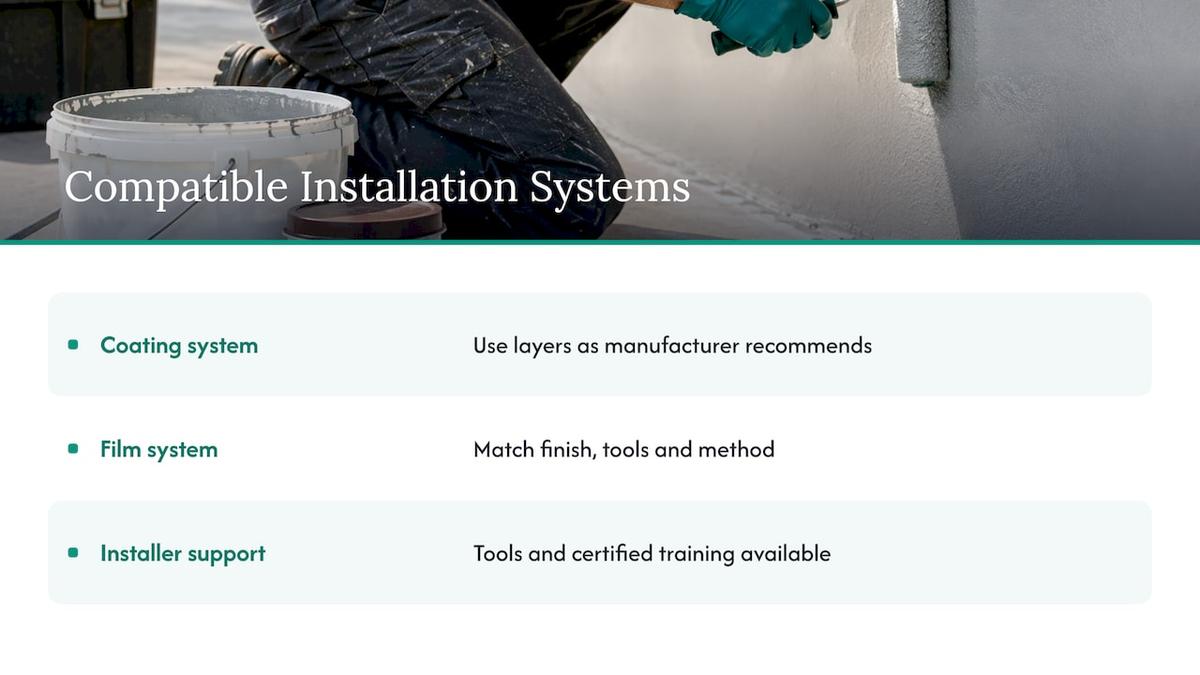
ASTM’s D3730 guide advises using a complete coating system as recommended by its manufacturer, because each layer is formulated for compatibility with the others. The principle applies to film too: use the finish, tools and application method designed to work together. We offer installation tools and certified training for professional installers, which helps keep that chain intact from roll to wall. If you are interested in how bonding agents and primers influence adhesion between layers, this overview of adhesion promoters for coatings explains the chemistry that sits behind compatible systems.
Treat seams, corners and edges with care
Edges are where cleaning liquids first find a way in. Plan seam locations away from splash zones, wrap corners where the film allows, and trim cleanly. The stretchable film and air-channeled adhesive are designed to make smooth application of these details more manageable, which is why a trained installer matters on commercial jobs.
Cleaning, maintenance and repair
A chemical resistant finish still lasts longest with a sensible routine.
- Document the approved cleaners and dilutions in the handover pack so cleaning contractors do not improvise.
- Wipe, then rinse. Residue from a disinfectant left to dry can dull any surface, so follow the product label’s directions on contact time and rinsing.
- Use soft cloths rather than abrasive pads on textured finishes.
- Fix small damage early. A film is made of panels, so a damaged section can be addressed locally rather than refinishing a whole wall, which is helpful for hotels that rotate rooms through maintenance.
- Keep leftover offcuts from the project for future patches, so color and texture match.
Our perspective
We hear the same story from designers and operators: the walls that look best on day one are not always the ones that look best after a year of cleaning. Chemical contact, scuffs and humidity arrive together, so we think about walls as a complete surface, not a single property.
That is why Bodaq is made as a premium film with stretchable, self-adhesive handling, an air-channeled adhesive and certified durability for high-traffic environments. It lets a team change a space quickly and cleanly, with less waste, while keeping the sculptural, bold or quietly organic look the design calls for.
Our advice is simple: write down your cleaning chemicals, choose the collection that suits the zone, and install it as a system. A wall that is easy to clean is a wall people keep looking after.
Bodaq
Choose your Bodaq finish
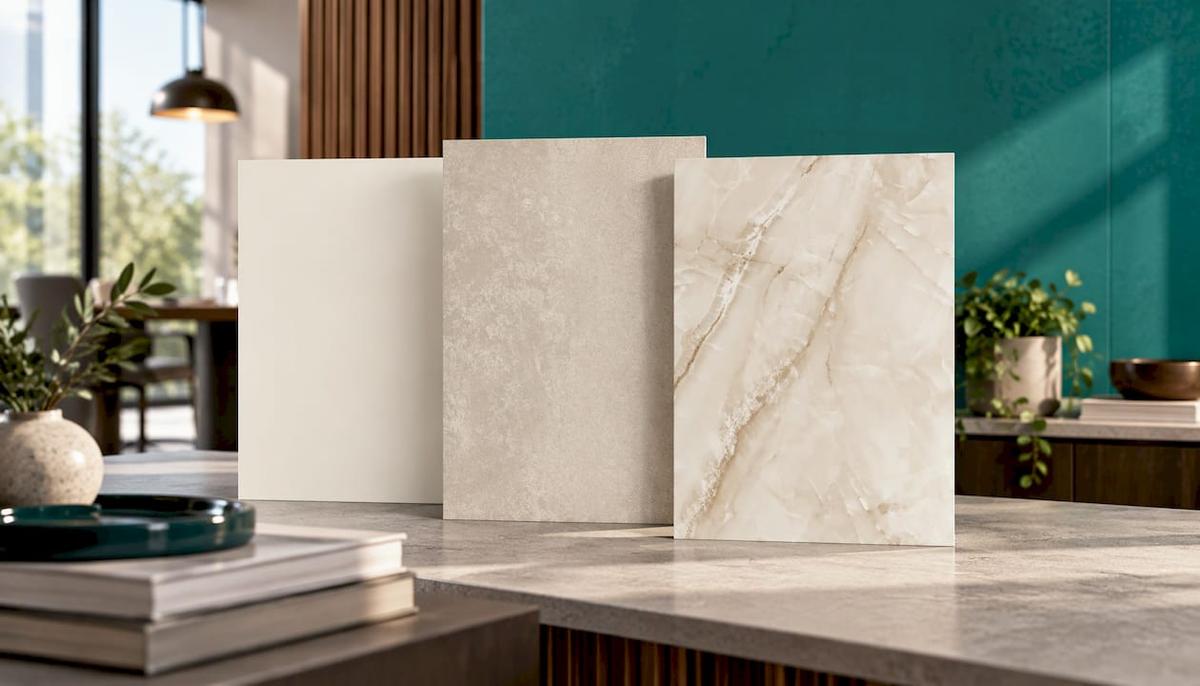
Bodaq offers its interior film across Wood, Metal, Stone & Marble, Solid Colors, and Fabric & Leather collections, plus installation tools, samples, and certified training for installers. Explore the full range on the Bodaq interior film collections page and pair a durable surface with the look your space deserves.
For project quantities or dealer and installer programs, start at Bodaq Interior Film.
FAQ
What is the most chemical resistant wall finish for commercial interiors?
There is no single winner, because resistance depends on the chemical, its concentration and the contact time. The best choice is the finish whose documented performance matches your cleaning routine and traffic level. For wipe-down zones, a high-performance, easy-clean film such as Bodaq’s ECF01 collection is a good place to begin.
Can interior film be used where disinfectants are used daily?
Yes, for many hospitality, office, education and wellness spaces, film is a practical finish, and it is designed for high-traffic environments. List your disinfectants and dilutions, check them against the finish, and follow the label’s contact and rinse instructions. Samples let you confirm the result on your own routine.
How is a film different from a high-performance coating?
A coating is built on site in layers and has to cure on the wall. A film arrives as a finished sheet and is applied with a self-adhesive backing, which shortens disruption. Both are judged on the same properties, such as chemical resistance, abrasion, adhesion and cleanability.
Does installation affect chemical resistance?
Very much. Substrate preparation, seam placement and using the finish as an intended system all influence how well a wall holds up. Certified installer training exists to make that consistency repeatable across a project.
Sources
- ASTM D3730 Standard Guide for Testing High-Performance Interior Architectural Wall Coatings
- ASTM D1308 Standard Test Method for Effect of Household Chemicals on Clear and Pigmented Organic Finishes